Clutter family murders
In Cold BloodThe Clutter family murders took place at River Valley Farm, outside Holcomb, Kansas, during the night of November 14–15, 1959. Herbert William Clutter, Bonnie Clutter, Nancy Clutter, and Kenyon Clutter were killed in their home. The crime turned an apparently secure farming community into a place of fear and suspicion; the investigation that followed eventually connected the killings to Perry Smith and Dick, while distinguishing the plan they shared from Smith’s later admission that he had killed all four family members.
Background and Plan
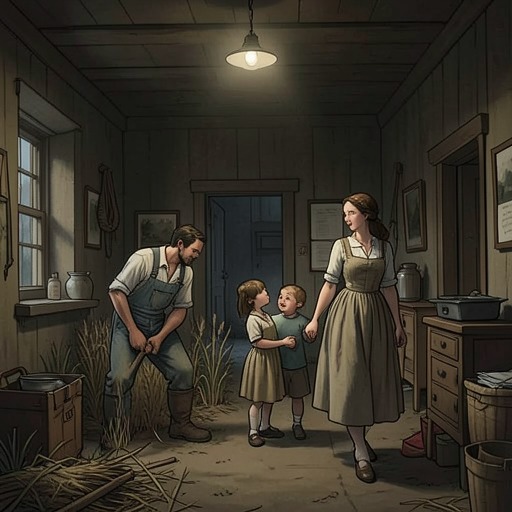
Before the murders, Holcomb was a small, prosperous community whose residents were accustomed to ordinary routines: farming, school activities, church, and neighbors who seldom felt a need to lock their doors. The Clutter family’s standing in the area made the attack particularly difficult to comprehend. In its first public account, the crime was described as brutal and without an apparent motive, a characterization that captured the community’s lack of an immediate explanation rather than a settled finding about why it happened.
The plan emerged from Dick’s claim that he knew of a sure opportunity. In preparation, the two men considered disguises and other practical details. Perry, who had served in the United States Merchant Marine and understood rope and knots, selected a length of White nylon cord. When Dick tried to estimate how many people might be in the house, he counted the four family members and allowed that there could be additional visitors. He insisted that everyone present would have to be killed. The possibility of guests made the plan’s intended scope uncertain in number but explicit in its purpose: there were to be no surviving witnesses.
On the night of the attack, the men drove through Holcomb, crossed the Santa Fe tracks, and followed the darkened lane toward the farm. Dick recognized landmarks as they approached and switched off the car’s headlights before proceeding slowly. The journey from the familiar, settled town to the house was thus also a movement from an imagined opportunity to the crime itself. The evidence in the book establishes their arrival and the subsequent killings, but not every moment or sequence inside the house.
The Attack and Discovery
The Clutters were restrained in different parts of the home and killed with a shotgun. Nancy was found in her bedroom; Bonnie was found in another upstairs room. Kenyon was discovered in the basement playroom, and Herbert in the furnace room. The differences in where and how each family member was found became part of the later reconstruction, but they did not by themselves establish the exact order of deaths. At the first press conference, Alvin Adams Dewey stressed that the coroner could place the murders only within a window between eleven on Saturday night and two on Sunday morning, not determine who died first or which family member had initially been targeted.
The absence of an obvious disturbance did not make the scene easier to interpret. The household telephones had been disconnected, and the family’s rooms showed little sign of a struggle. Herbert’s billfold had been searched, but he was known not to carry cash. Rings remained on Bonnie, a detail that made a simple explanation based on taking her jewelry seem inadequate. Investigators also found physical traces, including a bloodstained half-sole footprint and evidence of the cord and tape used to restrain the family. These clues offered points of comparison for investigators, while leaving the central questions of motive and sequence unanswered at first.
The killings came to light on Sunday morning. After Clarence Ewalt’s daughter Nancy Ewalt failed to get an answer at the house, Clarence went to seek help. By 9:35, the sheriff had arrived, and the search proceeded room by room. The discovery of the bodies transformed a family home into the scene of a fourfold homicide investigation. As the house filled with officials, medical personnel, and reporters, the initial assumption that something like an accident might have occurred gave way to the recognition that the family had been deliberately attacked.
Investigation and Changing Accounts
Alvin Adams Dewey took charge for the Kansas Bureau of Investigation. His connection to Herbert and Bonnie, whom he and his wife had known through church and visits, made the case personal to him, though his professional role required him to separate what was known from what was conjecture. At the outset he considered two competing reconstructions: one in which a person familiar with the home had acted alone, and another involving two killers. He publicly distinguished those theories from facts, noting that investigators did not yet know the primary target, the order of deaths, or whether one person or two had committed the murders.
The investigation grew to include eighteen men assigned full time, among them Harold Nye, Roy Church, and Clarence Duntz. The case’s physical evidence was later examined by Federal Bureau of Investigation laboratory specialists, who assessed blood samples, footprints, cartridge shells, rope, and tape. The investigation also traced a radio and binoculars taken from the house to a pawnshop in Mexico City. Perry’s account disclosed another cache: he said that after leaving the farm, the men buried empty shells, remaining cord, and tape in the prairie, then burned clothing and gloves at a roadside rest area. These recoveries and disclosures gave investigators evidence beyond the men’s competing statements.
Those statements changed in consequential ways. Dick gave investigators a signed confession that accused Perry of committing all four murders. Perry initially said Dick had killed Nancy and Bonnie, but later told Dewey that he himself had shot the entire family. He explained that his earlier account had been intended to punish Dick for what Perry regarded as cowardice, and said he wanted the record corrected partly out of consideration for Dick’s parents. Perry nevertheless refused to sign the typed, seventy-eight-page statement unless he could change the disputed details. Dewey did not permit the revision, reasoning that the case did not depend on a signed confession from Perry. The accounts therefore formed part of a record that had to be evaluated alongside physical evidence, rather than treated as identical or uncontested testimony.
Consequences and Significance
The first consequence was not a clear explanation but a collapse of confidence. News spread through church pulpits, telephone lines, and local radio. Residents who had seldom worried about one another began to imagine the killers among people they knew. The uncertainty intensified because the Clutters were widely regarded as popular and because the scene did not immediately reveal a convincing motive. In a community where neighbors had seemed to be nearly the only source of security, the killings made familiar relationships feel newly uncertain.
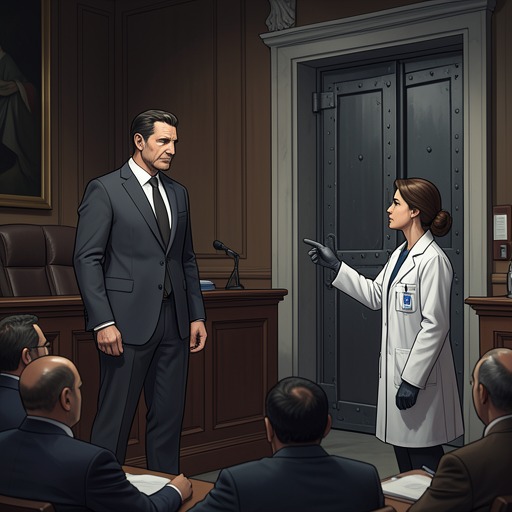
At trial, the prosecution placed the physical evidence and the defendants’ confessions before the jury. Alvin Adams Dewey’s testimony brought Perry’s account of the killings into public view, while the forensic witnesses addressed the evidence connecting the accused to the crime. In his closing argument, prosecutor Logan Green emphasized that the robbery yielded only forty dollars’ worth of goods and argued that the small gain could not justify the deaths. His appeal for the maximum penalty framed the case as a deliberate choice to exchange the lives of four people for a meager return; that was the prosecution’s argument to the jury, not an explanation that resolved every question about the killers’ psychology.
The murders thus carry two linked consequences in the narrative: the destruction of a family and the destruction of Holcomb’s sense of ordinary safety. Their apparent lack of a sufficient motive persists alongside evidence of planning, restraint, theft, and later confession. The investigation narrows the factual uncertainty, but it does not make the community’s original question disappear: how could a life built within the familiar routines of home and neighborliness be ended by an attack that seemed to have no proportionate cause?